“Empty Tomb and Our First Fruits”

Happy Easter! Most of us celebrate Easter in many different places. But we are not gathered to watch the rising of the sun, S-U-N, but to celebrate the rising of the Son, S-O-N. The sun, S-U-N, rises every day of the year; on Easter we celebrate because the S-O-N has risen. The Son of God, who was dead, but who burst the bonds of death— the Son of God, who rose only once, but whom Paul describes as “the first fruits of those who are asleep” (1 Corinthians 15:20).
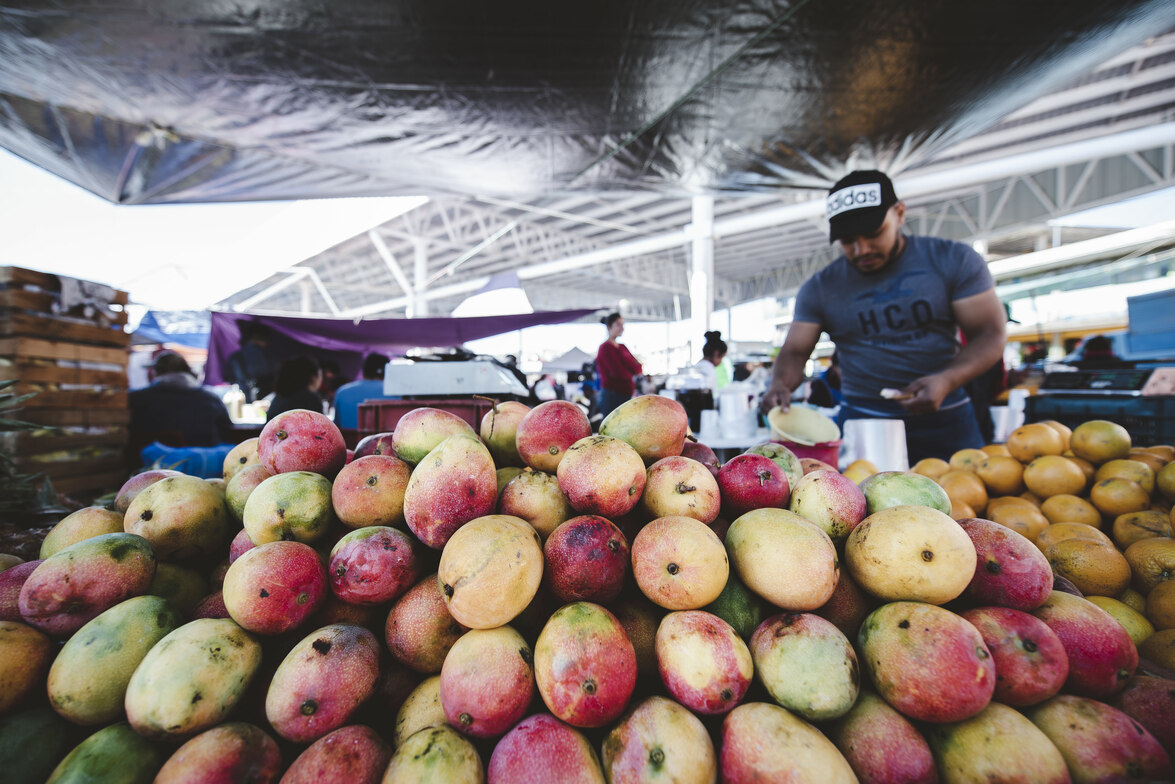
That term, “first fruits” is interesting. We do not use that phrase today. Let us think about what it means. In Biblical times, people could not fly in fresh fruits and vegetables from California. They had to wait until the season came for fruit to grow. When summer came and fruit began to ripen, it was a happy event. People had waited many months—nearly a year—for the first fruits of the season. Imagine their delight as they were able to eat fresh ripe tomatoes, instead of items that were canned and stored on shelves.
In a couple of months, we will get the first fruits of the season. We will finally be able to eat a real tomato again—not the tasteless, hard tomatoes of winter, but the firm, ripe, red, juicy tomatoes of summer. That first tomato of the year is a special treat, isn’t it! I love to fix a hamburger on our outdoor grill and to top it off with a thick slice of vine-ripened tomato. There is nothing like it.
A part of the joy of the first fruits of the summer is the realization that it is just the first of many red, ripe, juicy summer tomatoes. That one tomato announces the coming of a host of tomatoes. It is the first of many fruits. And so it is with the resurrection of Jesus. Paul says, “But now Christ has been raised from the dead. He became the first fruits of those who are asleep” (1 Corinthians 15:20).
Easter is God’s promise that, not only has Christ risen from the dead, but that we, through His power, shall also rise victorious from the grave. Christ rose as the first fruits, the first of many who will rise from the dead. Easter is special, not simply because Christ rose from the dead, but because He makes it possible for us to rise from the dead. Easter is special, not just because Christ conquered death for Himself, but because He also conquers death for us.
We Christians use the word, “Gospel,” which means “Good News.” This is the good news—"Christ has been raised from the dead. He became the first fruits of those who are asleep.” If that is not true, Paul says that we Christians are most to be pitied, because we have staked our lives on a lie. If it is true, it is the most important truth in the world. It is indeed Good News; in fact, it is Great News. It means that we live with the assurance of enjoying the life abundant and life eternal that Jesus said that He offers.
That is Good News for tomorrow, but it is also Good News for today. Many of us have lost loved ones—fathers, mothers, husbands, wives—even children (that is the hardest—the children.) But Easter is God’s promise that the stone that stops the mouth of the grave is never great enough to block the resurrection.
And because Christ broke the bonds of death, the grave is not the end for your loved ones. We have the hope that one day we will reign eternally with Christ, reunited with those whom we love—and able, finally, really to love completely.
But the Good News of Easter is not confined to the resurrection of the dead. Christ is the Lord over death, but he is also the Lord of life. And we need help in life as well as in death. A chaplain told me recently of seeing a sign in a home that said, ‘All life is suffering.’ I do not believe that all people are desperate or that all life is suffering, but I do know that desperation and suffering are very real for most of us at some points in our lives.”
Easter is God’s promise that He can make an Easter of every Good Friday. When life is difficult—when we are in pain—when the bad guys seem to be winning— when we lose our job—when a loved one dies—Easter is God’s promise that He will, in good time, turn the tables and make good the winner.
I have seen God bring Christians triumphantly through many terrible circumstances—you have too. God’s power and love are amazing to behold. But God’s resurrection power is even more immediate. The God of the open tomb is also the God of our daily lives. The God who gives us victory over death also gives us victory over life. What are your concerns today?
Are you worried about your children? Are you afraid that you might lose your job? Are you afraid that your marriage might break up? Are you struggling with depression? Are you disappointed with your life? Do you feel guilty, and fear that God will punish you? The Bible does not promise that we will be spared suffering. Our Lord suffered. He had His Good Friday, and we have ours. But the promise of Easter is that God, in all His power, is present with us in our painful moments— amidst our fears—when life seems darkest. The promise of Easter is that God not only walks with us through the darkness, but He will bring us into the light again.
In closing, let me leave you with a thought from the great preacher, George Buttrick. Buttrick said: “One item about the resurrection of Jesus has sometimes been overlooked; He showed Himself after death only to those who loved Him.”
Jesus loves you. Love Him—offer your first fruits so that you might see Him clearly. Love Him—so that you might experience His resurrection power.
Until Next Week When We Meet at the P.E.W
(Pastor’s Encouragement Weekly)
Pastor Joel